Hyperspectral Camera Price Breakdown: What Determines the Final Cost of the Equipment?
With hyperspectral imaging technology being widely applied in industrial quality inspection, precision agriculture, environmental remote sensing, materials research, mineral exploration, food sorting, and other fields, more and more buyers are encountering the same question: why is the price so different for cameras all called hyperspectral cameras? Many new buyers will notice that quotes for similar models can differ by double or even several times. Many people simply attribute the price difference to brand premium, but overlook the real cost differences caused by hardware architecture, technical specifications, and supporting solutions.
To rationally evaluate quotes and avoid overspending or buying underperforming equipment, you first need to clarify which core elements actually determine the final price of a hyperspectral camera.
I. Core Detector: The Biggest Cost Divider
The detector is the component with the highest cost proportion in a hyperspectral camera and is the fundamental line dividing different price tiers.
1. Silicon-based CMOS/CCD detectors (400–1000nm, visible to near-infrared, VNIR) have a mature industry chain, standardized manufacturing process, relatively controllable costs, and are widely used in industrial surface inspection, plant phenotyping, and basic laboratory research. They are suitable for color recognition, crop growth monitoring, and appearance defect screening.
2. Indium Gallium Arsenide (InGaAs) detectors (900–1700nm short-wave infrared, SWIR) are made from special semiconductor materials that are difficult to produce. Most models need TEC thermoelectric cooling to reduce dark current, substantially increasing component costs. SWIR can detect internal material composition, moisture content, and mineral characteristic absorption peaks, making them suitable for plastic sorting, soil composition analysis, mineral exploration, and internal food quality detection.
3. Extended SWIR and mid-to-long-wave infrared detectors (above 1700nm) have extremely high processing barriers, usually use Stirling cooling, and are only used for high-end research, aerial remote sensing, and special substance detection, with device prices reaching millions.
Even within the same wavelength band, detector pixel size, quantum efficiency, and signal-to-noise ratio also affect pricing. High SNR detectors can reliably capture spectral data in low-light conditions and reduce noise interference, which is essential for field inspections and low-light lab experiments.
For different application scenarios, the FigSpec® series hyperspectral cameras match corresponding detector specifications: VNIR models use high-quantum-efficiency industrial-grade CMOS, while SWIR models come with cooled InGaAs sensors. This flexible hardware configuration ensures data accuracy while helping users avoid unnecessary expenses from redundant setups.
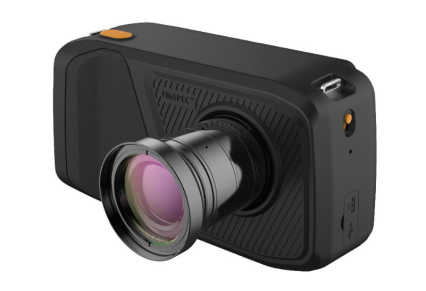
II. Optical Spectroscopy System: Determines Spectral Data Quality and Equipment Cost
Hyperspectral cameras rely on spectral modules to split complex light into hundreds of continuous bands. The optical design directly affects stray light levels and spectral uniformity and is a key factor in price differences. Mainstream spectral solutions include transmission gratings, reflection gratings, and AOTF acousto-optic tunable filters:
Transmission gratings are compact, control stray light well, and are suitable for industrial online inspection and portable devices;
Fully reflective optical systems have lower chromatic aberration, mostly used in aerial and high-precision research scenarios, but manufacturing and assembly costs are higher;
AOTF snapshot solutions capture images instantaneously, are suitable for dynamic high-speed targets, and component costs are significantly higher than traditional push-scan solutions.
The grating line accuracy directly corresponds to spectral resolution. Common spectral resolution ranges are 2.5nm–10nm:
≤3nm is high-precision, suitable for fine material spectral identification and scientific quantitative analysis;
5–10nm is general-purpose, meeting agricultural monitoring and regular industrial sorting needs.
With the same optical architecture, higher spectral resolution increases processing and calibration difficulty, and device prices rise accordingly. Many buyers fall into the trap of blindly chasing extreme spectral resolution. If you only need rough material classification, 5–8nm resolution models will meet your needs; only when you need to distinguish closely related materials or capture subtle spectral absorption features should you go for 2.5nm or higher-precision configurations. The ColorSpec tech team can recommend the matching optical specifications based on the spectral characteristics of the material to balance performance and budget.
III. Imaging Mode, Hardware Specifications, and Scenario Adaptation Design
The market currently mainly offers three types: push-scan (line scan), snapshot, and whiskbroom scanning, each suited to different scenarios and hardware costs.
1. Push-scan hyperspectral cameras (mainstream in the market)
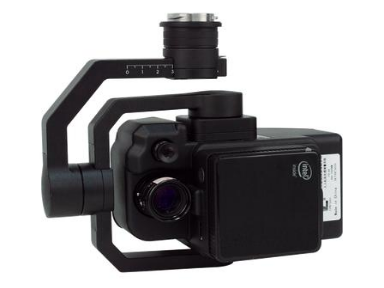
Capture one row of pixels at a time, combined with a motion platform, conveyor belt, gimbal, or drone flight to complete 2D imaging. They have strong spectral stability, multiple channels, and balanced cost-performance, widely used in production line inspection, drone remote sensing, and lab scanning. Models like FS2X and FS60-C adopt mature push-scan architecture, suitable for most industrial and remote sensing projects.
2. Snapshot Hyperspectral Camera
Captures a complete 3D spectral cube in a single exposure without the need for platform movement, making it suitable for high-speed production lines and dynamic live observations. However, for the same cost, the number of spectral channels is less than that of push-scan models, and the hardware cost is higher.
Besides this, the number of spatial channels, imaging frame rate, and body structure design also affect pricing:
High spatial channel models (1024/1920 spatial pixels) offer a larger field of view and better detail resolution, but come with higher optical and data transmission costs;
High-speed line frequency models are adapted for fast conveyor lines and require matching high-speed transmission circuits;
Lightweight reinforced bodies, wide-temperature designs, and dustproof shells are optimized for outdoor and aerial scenarios, and their manufacturing cost is higher than that of desktop lab models.
IV. Supporting Software, Algorithms, and Secondary Development Capability
Many purchase inquiries only compare the bare camera price and ignore software costs, which can easily lead to hidden expenses later. A complete and usable hyperspectral solution includes: image capture software, radiometric calibration, whiteboard calibration, spectral preprocessing tools, material classification algorithms, and data export modules. Low-end models only provide basic image capture features; spectral analysis and modeling functions require additional third-party software purchases. Established manufacturers provide a full suite of self-developed software tools, support ENVI standard format export, and include built-in spectral index calculation, ROI analysis, supervised classification, and unsupervised classification features.
For automated production line customers, whether an SDK development kit is provided and whether it supports integration with machine vision systems is also an important cost factor. FigSpec’s full range of hyperspectral imaging equipment comes standard with acquisition and basic analysis software, and an open standard SDK, making it easy for companies to integrate into existing automated inspection systems and reduce secondary development costs.
V. System Integration Solutions: Bare Camera Price ≠ Total Project Cost
There are two pricing modes: single bare camera quotes and turnkey complete system quotes. The difference can be huge and is often the reason for price confusion in procurement.
1. Bare camera: only the camera body; lenses, scanning platforms, whiteboards, data cables, and computers need to be purchased separately;
2. Complete system: camera with matched lens, motorized translation stage, standard whiteboard, industrial computer, calibration tools, mounting brackets, and commissioning service.
Common additional integration costs:
✅ Custom lenses with different focal lengths (short-focus wide field / long-focus microscopic observation)
✅ Laboratory motorized scanning rails, gimbal servo systems
✅ Drone gimbals, shock-absorbing structures, onboard power components
✅ Radiometric calibration whiteboard, lighting systems
✅ On-site commissioning, project technical training
For the same camera model, the total price with a full set of integrated accessories can be 30%–80% higher than the bare camera. Before purchasing, be sure to confirm the included items with the supplier to avoid constantly adding to the budget later.
VI. Long-term Service, Calibration, and Supply Chain Costs
Hyperspectral instruments are precision optical devices, and their long-term value depends on continuous technical support: regular spectral calibration, fault repairs, firmware upgrades, and application guidance. Some low-cost equipment only offers basic warranties and does not include spectral calibration services. Over time, the spectra may drift and detection accuracy will gradually decrease. Reputable manufacturers provide annual calibration, remote technical support, and on-site application guidance.
Pricing is also influenced by the supply chain and the level of in-house development. Manufacturers that independently develop core optical modules, detector driving circuits, and imaging algorithms can save multiple layers of middleman costs and have the flexibility to adjust configurations. CaiPu has a complete optical, hardware, and algorithm R&D team and can make minor custom adjustments based on customer needs without the burden of high custom development costs.
VII. Market Price Range Reference (2026 market trends, for selection reference only; final pricing depends on specific configuration: standalone unit / fully integrated solution)
1. Entry-level applications are suitable for basic university research, small factory material sorting, and portable field monitoring. Typical configuration: 400–1000nm VNIR band with general spectral resolution. Representative options: FigSpec® FS-20, FS-22 VNIR series.
2. Mid-range industrial & remote sensing models are aimed at continuous production line quality inspection, large-area farmland monitoring, and field surveys. They support VNIR/SWIR band options, high signal-to-noise ratio designs, and can be paired with gimbals and small aerial platforms. Representative options: FS-23, FS-25, FSIQ portable series.
3. High-end airborne & precision research models are used for aerial remote sensing, microscopic spectral analysis, and detailed material identification. They offer wide spectral coverage and lightweight designs suitable for airborne platforms. Representative options: FS60-C, FS6B airborne imaging systems.
Tip: Budget does not equal performance. If only identifying visible and near-infrared samples, there's no need to upgrade to shortwave infrared models; static lab setups don't require the additional ruggedized airborne version.
VIII. Procurement Pitfalls Guide: How to Rationally Inquire Based on Cost Logic
1. Lock in application requirements first, then set parameters
Clarify the usage scenario: desktop lab / online production line / field portable / drone-mounted; the feature bands of the materials to be tested; allowable spectral resolution and detection speed. Only then can manufacturers provide precise configurations without over-specifying or underperforming.
2. Ask all suppliers for a unified comparison quote list with detailed pricing: standalone unit should include accessories, software permissions, warranty period, whether first on-site commissioning is included, and calibration services.
3. Distinguishing short-term procurement costs from long-term usage costs. If low-priced equipment is software-closed, cannot be developed twice, and annual calibration fees are high, long-term comprehensive costs are actually higher; Priority is given to partners with open software and hardware ecosystems that continuously provide technical support.
4. Prioritize vendors with experience in scenario implementation. Hyperspectral hardware is just the foundation; the ability to provide corresponding experience in spectral modeling and detection solutions is crucial. The spectral technology team has numerous practical cases in plastic recycling and sorting, agricultural product quality testing, vegetation remote sensing, and material defect detection, enabling us to simultaneously provide mature spectral analysis concepts and shorten project implementation cycles.
Conclusion
The pricing logic of hyperspectral cameras is essentially a comprehensive reflection of performance indicators, hardware solutions, supporting services, and integrated content; there is no unified market pricing. The type of detector determines the base price ceiling; Optical systems and spectral parameters determine data quality; Software, integration solutions, and after-sales service determine the total project implementation cost.
For the purchaser, the optimal solution is not about pursuing the lowest price, but about matching the project's needs, eliminating redundant parameters, and choosing an imaging system that balances hardware and software and provides sustainable service. If you are evaluating a hyperspectral camera solution, you can combine the sample under test, platform used, and budget range to obtain targeted specification configurations and complete quotation plans.
FAQ
Q1: Why are shortwave infrared hyperspectral cameras much more expensive than visible light models?
A: The core reason is that InGaAs detectors require higher raw materials and manufacturing processes. Most models require cooling modules to suppress noise, optical coating processes are more advanced, and the overall hardware cost is significantly higher than that of silicon-based VNIR equipment.
Q2: For industrial production line inspection, is it necessary to choose cameras with the highest spectral resolution?
A: No, it is not. Most materials can be sorted at a resolution of 5–10nm for stable sorting; Only when the spectral curves of the two materials are highly close is a high-precision configuration ≤ 3nm is required.
Q3: How to choose between push-to-sweep and snapshot types, and is the price difference significant?
A: The push-sweep type offers better cost performance and is suitable for most fixed platforms, drones, and conveyor belt scenarios; Snapshot types are suitable for high-speed motion instantaneous imaging, and are more expensive for the same spectral specifications.
Q4: Besides the camera, what other necessary budget is needed for a hyperspectral system?
A: Lenses, standard whiteboards, light sources, motion scanning platforms / drone gimbals, industrial control computers, professional analysis software, on-site commissioning, and annual spectral calibration all need to be included in the overall budget evaluation.


