An Overview of General Approaches to Sample Preparation for Polarimetry Across Various Industries
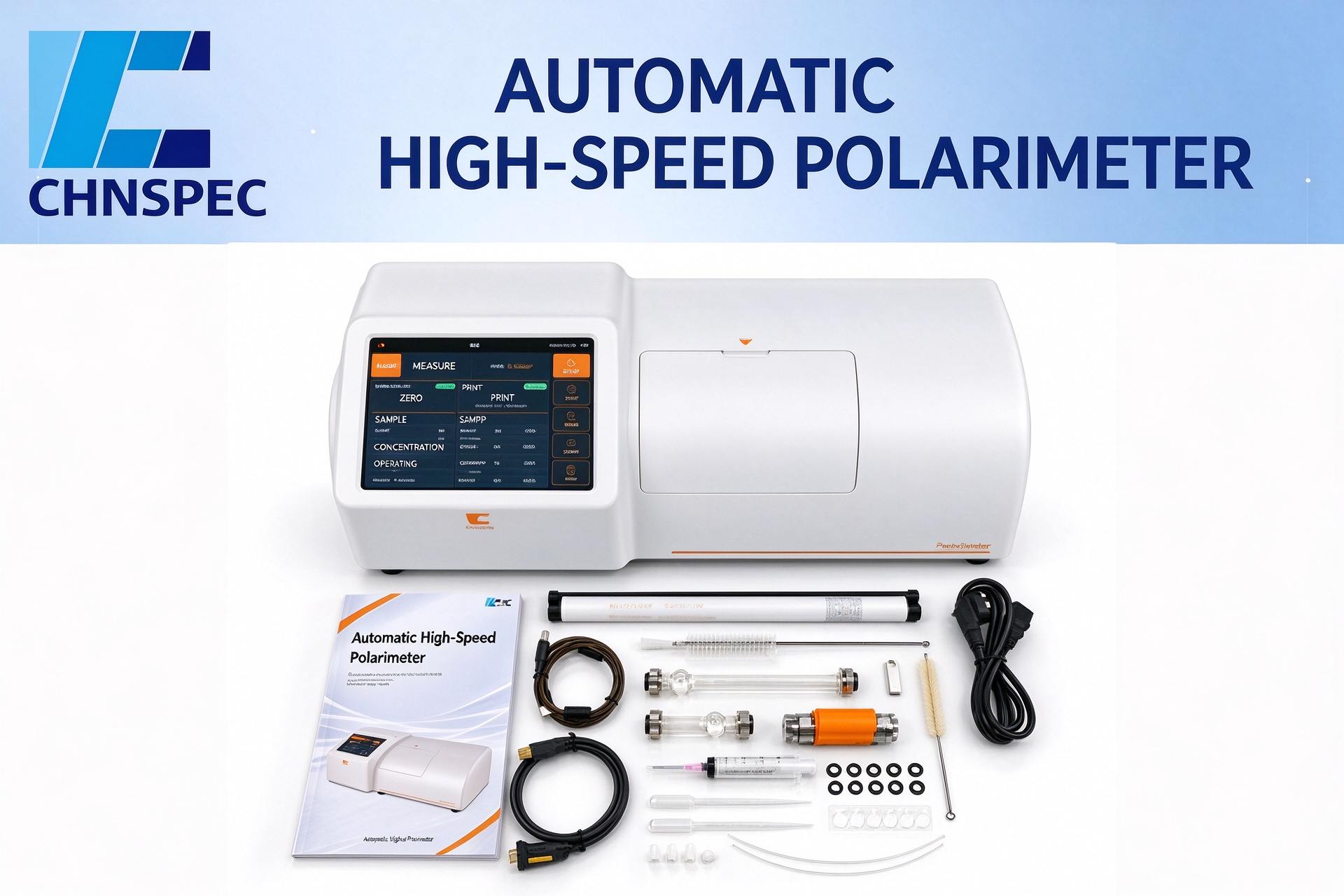
Polarimeters can only analyze clear liquid samples; suspended particles, turbidity, or air bubbles interfere with polarized light, leading to inaccurate test results. Whether in the pharmaceutical, food, chemical, or scientific research sectors, obtaining reliable optical rotation or specific rotation data requires—beyond the performance of the instrument itself—meticulous sample preparation. Drawing on the practical application of CHNSpec’s fully automated, high-speed polarimeters, this guide outlines general approaches to sample preparation across various industries.
In the pharmaceutical industry, solutions of active pharmaceutical ingredients (APIs) must be prepared according to pharmacopeial standards. Solid APIs should be dissolved in the solvent specified by the pharmacopeia and mixed thoroughly; some substances may dissolve slowly and require sufficient time to settle. If a solution appears turbid, it must be filtered to remove insoluble impurities. During filtration, pay close attention to temperature—some drugs may precipitate at lower temperatures, so the process should be maintained at an appropriate temperature. Once prepared, the solution should be tested within the timeframe stipulated by the pharmacopeia to prevent sample degradation, which could alter its optical activity. Before filling the polarimeter tube, rinse it two to three times with the sample to minimize dilution effects from residual solvents, and ensure that all air bubbles are carefully removed after filling.
Samples in the food and sugar industries—such as syrups, honey, or fruit and vegetable extracts—often contain suspended colloids or tiny solid particles. If these are introduced directly into the instrument, the suspended particles will scatter the polarized light, causing unstable signals and significant fluctuations in readings. Typically, filtration is used to remove suspended matter, with the choice of filter paper or membrane depending on the sample matrix. Highly concentrated syrups are often very viscous and may need to be diluted according to standard methods; the dilution factor must be recorded so that it can be factored into subsequent calculations for concentration or sugar content. Some sugar-based samples may crystallize at low temperatures; therefore, it is essential to maintain the appropriate temperature during both sample preparation and loading to prevent crystallization. If using an instrument equipped with temperature control, allow the sample in the tube to reach thermal equilibrium before initiating the measurement.
For samples in the fine chemical, personal care, or fragrance and flavor industries, organic solvents are frequently used for dissolution. Because many organic solvents are highly volatile, samples should be tested as soon as possible after preparation to prevent concentration changes caused by evaporation. Some plant essential oil extracts are deeply colored and exhibit low light transmittance; ensure that your specific instrument model is capable of handling samples with such low transmittance. If a sample contains insoluble impurities, remove them by filtration. When switching between different solvents, thoroughly rinse the polarimeter cell to prevent residue from the previous sample, which could cause cross-contamination of the next test solution.
For research samples—such as products from chiral synthesis—ensure the substance is fully dissolved and the resulting solution is clear. If tiny solid particles are present, use a membrane filter to remove them. When conducting temperature-dependent experiments, place the sample in a temperature-controlled polarimeter cell and allow sufficient time for thermal equilibrium; do not take measurements immediately after loading the sample. For comparative experiments, keep the concentration, solvent, and temperature consistent across all samples to ensure the data remains comparable.
Be aware of several common pitfalls during sample preparation. First, some users assume that because an instrument supports dark, low-transmittance samples, there is no need to filter turbid samples. While low transmittance is typically due to light absorption by color, turbidity is caused by suspended particles that scatter light. This scattering disrupts polarized light, making it impossible to obtain reliable data—even with high-end polarimeters—so filtration remains essential. Second, failing to rinse the polarimeter cell before loading the sample can lead to dilution by residual solvent, resulting in lower-than-actual optical rotation values. Third, introducing air bubbles during sample loading can obstruct the optical path, causing the readings to drift. Fourth, leaving a prepared solution to sit for too long can lead to sample degradation or isomerization, altering its optical rotation properties.
Once sample preparation is complete, proceed to testing by selecting the appropriate measurement mode and correctly entering the path length of the polarimeter cell. Perform regular zero-point checks using pure water, and utilize the instrument’s multi-point automatic calibration feature for routine verification. While hardware forms the foundation of any measurement, proper sample preparation is indispensable for obtaining reliable optical rotation data. Regardless of the industry or the specific sample matrix, the core principles of sample preparation remain the same: ensure clarity, remove impurities, and prevent issues like evaporation or degradation.


How can we Help you?
Email*
Phone*
Name*
Country/Region*
Which Products are you interested in?*
Verification code