Polarimetric Detection Across Industries: Balancing Performance and Operational Costs
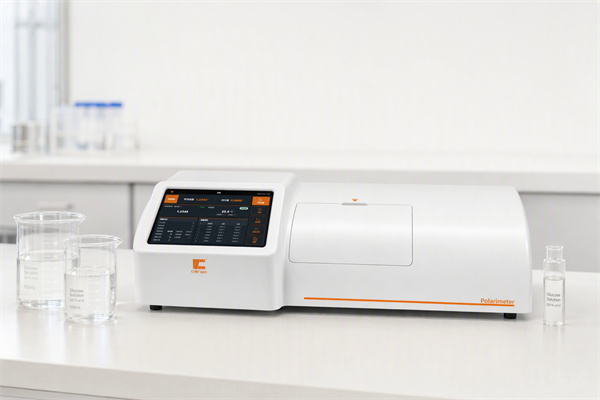
Polarimetric testing is widely used in pharmaceuticals, fine chemicals, sugar and food production, cosmetics, materials science, university research and other fields. Industries differ greatly in testing objectives, sample conditions and workload. The sugar industry focuses on sugar content measurement; the pharmaceutical industry prioritizes specific rotation, temperature control and data traceability; the daily chemical and flavor industries test the optical rotation properties of fragrances; university laboratories carry out routine teaching experiments as well as research projects that require custom measurement formulas. A polarimeter for diverse application scenarios cannot rely merely on a single high-end configuration, and a tiered configuration solution is required. CHNSpec automatic high-speed polarimeters are available in three models: DS-P500, DS-P700T and DS-P900T, targeting laboratories from different industries with varying budgets and balancing testing performance and long-term operating costs.
In terms of hardware, all models adopt an LED light source paired with a high-precision interference filter to produce the standard 589 nm sodium D spectral line, with a consistent accuracy class of 0.01. The measuring range covers ±90° optical rotation and ±259°Z sugar scale. Five measurement modes are supported: optical rotation, specific rotation, concentration, sugar content and user-defined. The user-defined mode allows entry of exclusive conversion formulas to meet testing requirements for research projects and special chemical samples, eliminating manual conversion and reducing calculation errors. All models feature a response speed of 8°/s and complete six measurements in an average of 26 seconds, easing the workload for operators when testing batches of samples. A 10.1-inch IPS capacitive touchscreen comes as standard with an intuitive interface, enabling new operators to get started after brief training and lowering the learning barrier.
Storage and communication specifications are consistent across the whole product line. The built-in 128 GB local storage can hold 1,500 measurement methods. Laboratories can pre-save test methods for different sample types and call them directly during testing instead of re-entering parameters repeatedly. Equipped with RS232, dual USB and WiFi interfaces, the instruments support LIMS connection and report output via WiFi printers, enabling flexible data export and printing for both information-based enterprise QC laboratories and ordinary university laboratories.
The three versions differ mainly in readability, temperature control, compliance software and capacity for low-transmittance samples. The entry-level DS-P500 offers a minimum readout of 0.001°, with no built-in temperature control, hierarchical permission management or electronic signature function. It suits budget-limited scenarios with clear, transparent samples and no material release compliance requirements, such as basic university teaching experiments, preliminary internal screening for enterprise R&D, and simple raw material screening for food manufacturers. It fulfills basic testing needs while controlling procurement costs.
The mid-range DS-P700T improves the minimum readout to 0.0001°, integrates a 10–60 °C temperature control module with ±0.1 °C temperature precision, and supports four-level password management, electronic signatures and data traceability. It is ideal for pharmaceutical QC, fine chemical quality inspection and flavor & cosmetic manufacturers, where samples are temperature-sensitive and full test records are required. It handles lightly colored samples with a minimum transmittance of 0.03%.
The high-end DS-P900T reaches a minimum sample transmittance of 0.01%, delivering stable measurements for poorly light-permeable samples such as dark extracts and colored API materials. Audit trail software is available as an option, making it suitable for research institutes, export-oriented pharmaceutical factories and QC laboratories that process large quantities of dark samples.
When selecting a polarimeter, higher specifications do not always equal a better choice. If most laboratory samples are clear and transparent and dark samples are rare, purchasing the high-end model will waste budget. Conversely, frequent testing of dark samples with the entry-level model will lead to insufficient signals and failed measurements. Selecting the appropriate model based on sample characteristics, testing standard requirements and quality management needs balances instrument performance and total lifecycle costs.


How can we Help you?
Email*
Phone*
Name*
Country/Region*
Which Products are you interested in?*
Verification code