What is the sodium D spectrum in a polarimeter? Why use a wavelength of 589 nm?
When reviewing the technical parameters of the polarimeter, you often see the following item: Operating wavelength: 589nm (sodium D spectrum).
Why 589nm and not other wavelengths? What exactly is the sodium-D spectrum? What is its relation to the polarimeter measurements?
To clarify these issues, we first need to understand a special optical phenomenon of sodium.
1. What is the sodium-D spectrum?
The sodium D spectrum is related to the luminescent properties of sodium elements.
When a sodium atom is properly excited, its internal electrons transition to higher energy levels. When electrons return from higher energy levels to lower ones, they release light of specific energy, forming emission spectra with characteristic wavelengths.
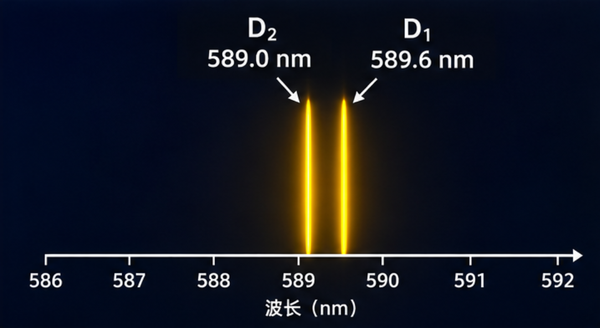
In the yellow region of visible light, sodium atoms have two very close and strong characteristic spectral lines:
D1 line: wavelength approximately 589.6nm
D2 line: wavelength approximately 589.0 nm
These two spectral lines together are called the sodium D double line, which is a very typical feature in the sodium atom emission spectrum.
In the field of optical rotation measurement, the characteristic spectrum corresponding to the sodium D double line is usually called the sodium D spectrum, with its representative wavelength often approximately represented as 589.3nm, and instrument parameters often abbreviated as 589nm.
It should be noted that the sodium D spectrum is not exactly the same as a single sodium D spectral line. Strictly speaking, the sodium D dual line contains two lines of different wavelengths, and 589nm is the nominal working wavelength widely used in the polarimeter field.
2. Why does the polarimeter use the 589nm wavelength?
The polarimeter is mainly used to measure the rotation angle of optically active materials relative to the direction of linear polarization of light.
For example, substances such as sucrose, glucose, and some chiral drugs all possess certain optical properties.
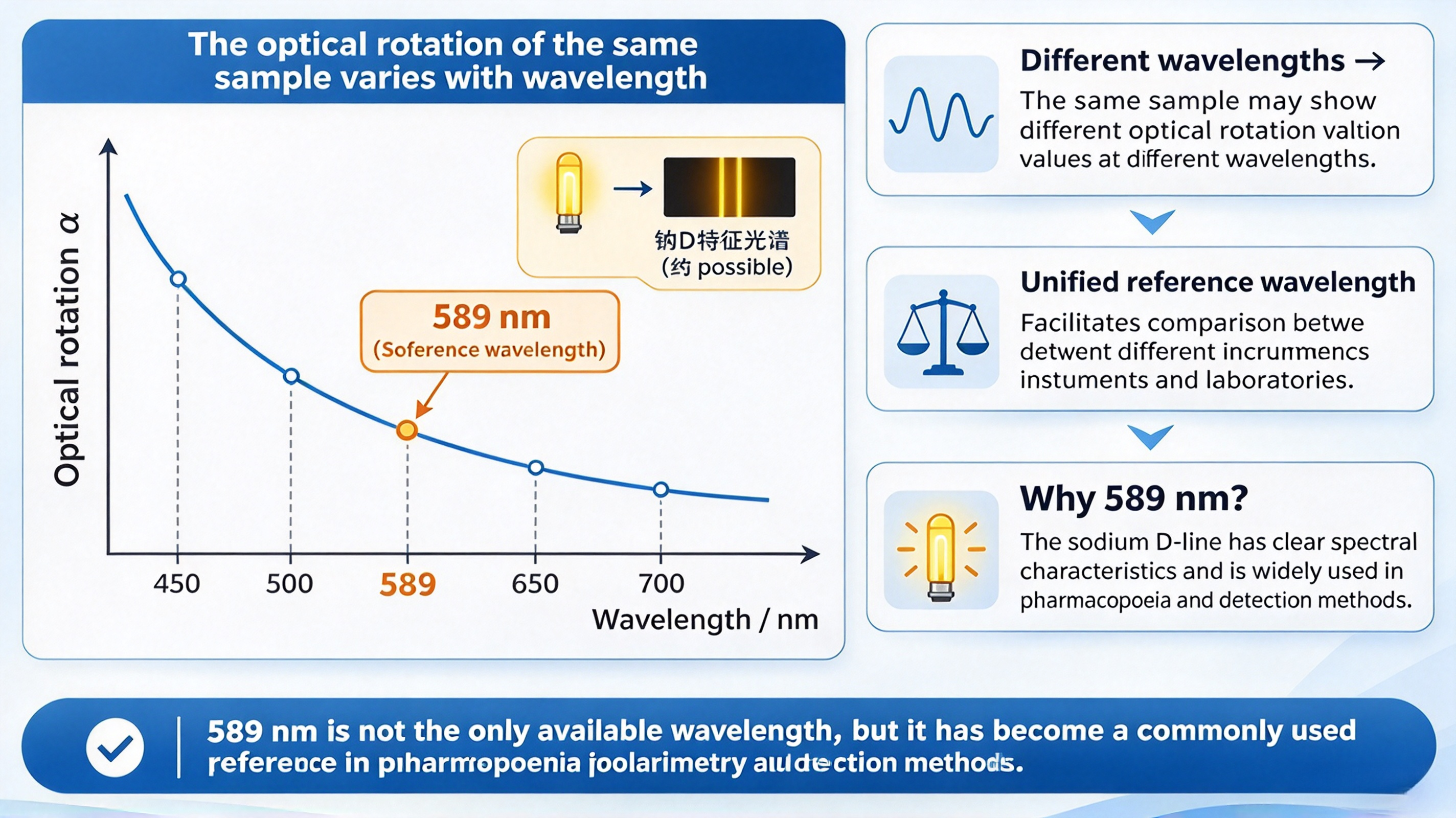
However, there is an easily overlooked issue: the same substance may produce different optical rotations under different wavelengths of light.
This phenomenon where optical rotation changes with the wavelength of light is called "optical dispersion."
In other words, even if the sample concentration, temperature, and tube length are exactly the same, using different wavelengths for measurement may yield different optical rotation results.
If different laboratories use different wavelengths, it becomes difficult to directly compare the measurement data.
Therefore, optical polarization measurements require a unified reference wavelength.
The characteristic spectrum of sodium D near 589nm has clear spectral characteristics, and traditional sodium lamps can provide a strong yellow characteristic light of A, facilitating relatively stable measurements.
After long-term use, the sodium D wavelength has gradually become a widely used reference condition in optical optical measurement. Many pharmacopeias, detection methods, and reference data for optical rotation also use this wavelength condition.
Therefore, 589nm is not because it measures better for all samples, but because it has clear spectral characteristics and a mature standardized application foundation.
3. What is the relationship between the 589nm wavelength and optical rotation measurements?
In actual testing, optical rotation is affected not only by the substance itself but also by factors such as the measurement wavelength, temperature, sample concentration, and path length of the light.
For example, in scientific literature or pharmacopeias, you often see symbols like this:
Where:
[α]: represents specific rotation, used to describe a substance's optical properties under certain conditions.
D: indicates the use of the sodium D reference line, corresponding to a wavelength of about 589nm.
20: shows that the measurement temperature is 20℃.
It’s important to note that α denotes optical rotation, while [α] denotes specific rotation—they aren’t the same. Optical rotation is the angle measured directly by the instrument, while specific rotation needs to be calculated considering the sample concentration and the length of the polarimeter tube.
This symbol reflects the key measurement conditions associated with a specific rotation value.
If testers need to compare their results with pharmacopeia standards, they should pay special attention to whether the measurement wavelength and temperature meet the method’s requirements.
For industries like pharmaceuticals, food, and fine chemicals, standardizing measurement conditions not only helps ensure data comparability but also facilitates product quality control and batch-to-batch analysis.
4. Do modern polarimeters still need to use sodium lamps?
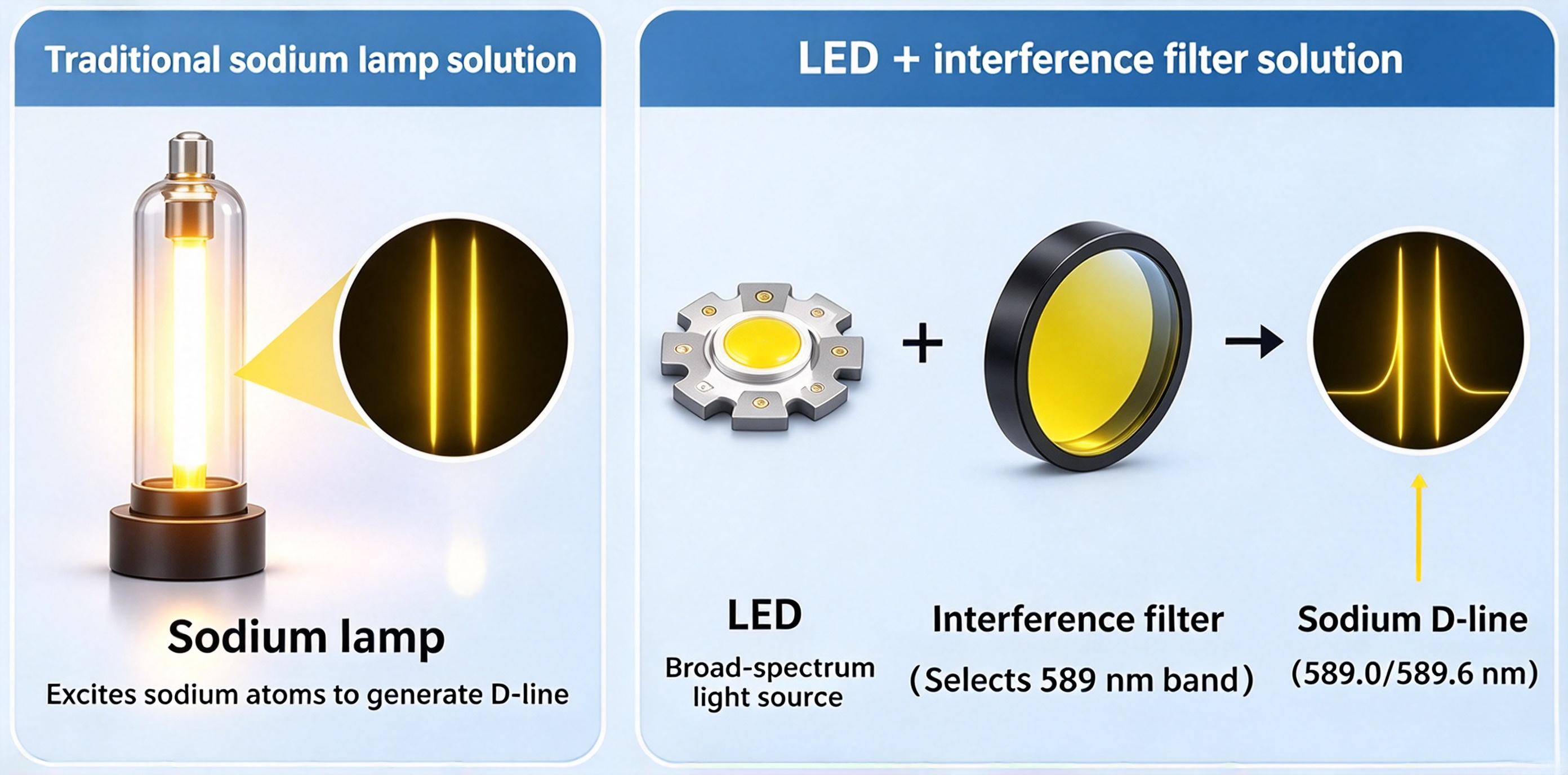
Traditional polarimeters often use sodium lamps as light sources, obtaining the sodium D spectrum through the characteristic emission of sodium atoms.
However, with advances in light source technology, modern automatic polarimeters do not necessarily need to use sodium lamps directly.
For example, the DS-P900T series fully automatic high-speed polarimeter from Caipu Technology uses LED light sources along with an appropriate optical filter system to achieve narrowband light centered around 589 nm, meeting the measurement requirements of the instrument.
Here, it’s important to distinguish between two situations:
Traditional sodium lamps generate sodium D characteristic spectral lines through sodium atom emissions, while LEDs combined with filters obtain the measurement light of the corresponding wavelength range through optical selection.
For users, the key points are the instrument's actual working wavelength, spectral bandwidth, wavelength accuracy, and whether the measurement results meet the requirements of the adopted standards.
Therefore, when choosing a polarimeter, you don’t have to judge performance solely based on whether it uses a sodium lamp. Instead, you should consider measurement accuracy, repeatability, temperature control, and the applicability of related testing methods.
5. Why do modern polarimeters still widely use the 589 nm wavelength?
Although light source technology for modern polarimeters has continually advanced, 589 nm remains a widely used reference wavelength for optical rotation measurements.
The reason is simple: using a unified measurement wavelength allows for better comparability of results across different instruments and laboratories, and makes it easier to compare with reference data in existing pharmacopeias, testing standards, and literature.
Therefore, even if modern polarimeters no longer use traditional sodium lamps, they can still achieve narrowband light around 589 nm that meets measurement requirements using LED light sources paired with optical filters, maintaining this established measurement condition.
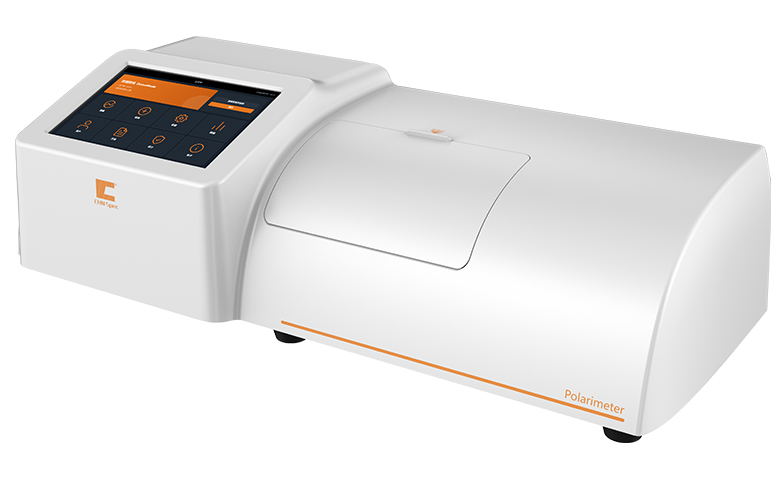
For example, the DS-P900T fully automatic high-speed polarimeter from Caipu Technology uses an LED light source with a high-precision interference filter, operates at a wavelength of 589 nm (sodium D spectrum), and supports measurements of optical rotation, specific rotation, concentration, and sugar content.
The instrument’s smallest optical rotation reading is 0.0001°, supports constant temperature control from 10–60°C, with temperature accuracy of ±0.1°C, meeting the testing needs in pharmaceuticals, food, chemical, and research fields.


How can we Help you?
Email*
Phone*
Name*
Country/Region*
Which Products are you interested in?*
Verification code