Metamerism Detection | CHNSpec Benchtop Spectrophotometer QC Guide
1. Introduction: The Costly Illusion of "Match Under Daylight, Clash in Store"
In automotive interiors, apparel manufacturing, coatings, and multi-component consumer electronics, quality control teams frequently encounter an expensive defect: two components—such as a plastic bumper and a metal chassis, or a dyed textile and its synthetic zipper—appear visually identical in the factory inspection booth, yet reveal an unacceptable shade discrepancy under commercial LED store lighting or warm incandescent home lamps.
This optical phenomenon is known as metamerism. When undetected during supplier incoming quality control (IQC) or assembly audits, metamerism leads to batch rejections, delayed product launches, and warranty claims across global supply chains. Visual inspection in light booths is subjective and limited by human eye fatigue, observer metamerism, and uncalibrated light sources.
Reliable detection requires moving beyond single-point visual pass/fail checks to automated, multi-illuminant spectral qualification using a high-precision spectrophotometer.
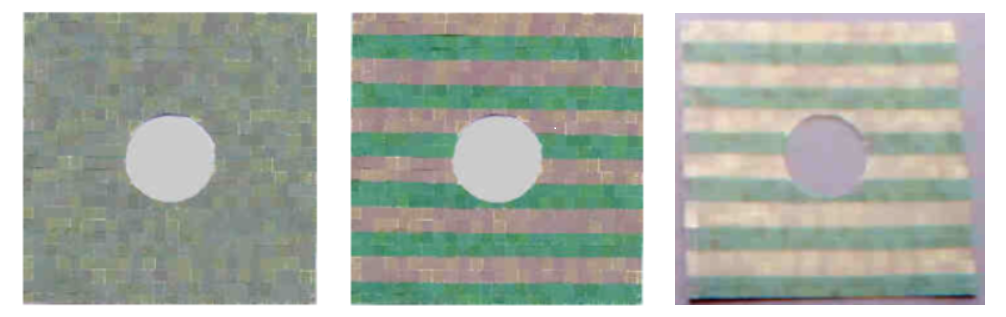
2. Why Metamerism Happens: Spectral Power Distributions vs. Tristimulus Values
Metamerism occurs when two specimens produce identical tristimulus values (X, Y, Z) under a specific illuminant (such as standard daylight D65) despite having distinctly different spectral reflectance curves across the visible light spectrum (360 nm to 780 nm).
Because human vision processes color through three retinal receptor types, different combinations of wavelengths can yield the exact same neural response under one light source. When the ambient illumination shifts—for instance, to retail fluorescent (TL84, CWF) or residential tungsten (Illuminant A)—the spectral power distribution of the source interacts differently with the two mismatched reflectance curves, causing the perceived color difference (ΔE*) to spike.
Conventional tristimulus colorimeters cannot diagnose metamerism because they capture integrated broad-band signals rather than discrete spectral reflectance curves. To quantify and eliminate metamerism, laboratory engineers calculate the Metamerism Index (MI_vis / MI_uv), defined under CIE and ASTM guidelines:

Reference illuminant: typically CIE Standard Daylight D65
Test illuminant: typically Illuminant A, F2, or commercial LED sources
ΔL*, Δa*, Δb*: Color difference components between target and batch under each respective light source
Evaluating MI across multiple light sources prevents discordant sub-assemblies before products reach mass production.
3. How the CHNSpec DS-36D Series Benchtop Spectrophotometer Resolves Metameric Failures
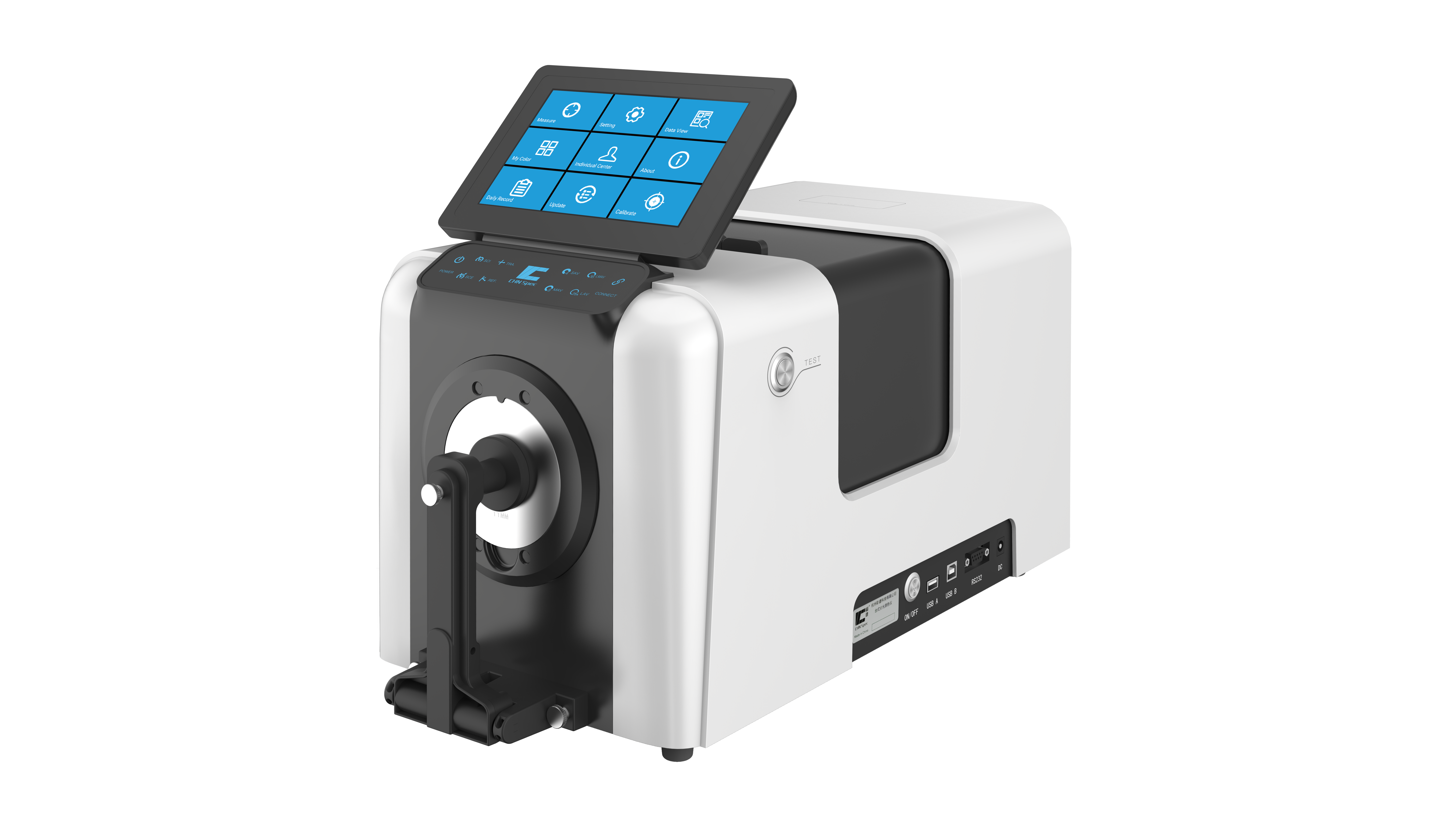
Addressing metameric failure requires an optical platform capable of high spectral fidelity, automated multi-source qualification, and long-term hardware repeatability. The CHNSpec DS-36D Series (DS-36D / DS-37D / DS-39D) is engineered specifically to eliminate cross-lighting color mismatches in precision manufacturing.
Dual Optical Path with Differential Spectroscopy Engine
Traditional instruments often experience short-term baseline drift caused by flash lamp energy fluctuations. The DS-36D series incorporates a patented dual optical path system based on a differential spectroscopy engine. While one sensor captures the sample signal through a 152 mm integrating sphere (d/8 geometry), a reference sensor concurrently monitors source energy variations, driving measurement repeatability down to ΔE*ab ≤ 0.005.
1 nm Resolution Grating Spectroscopy
To detect narrow spectral peaks where dye or pigment formulations diverge, the DS-36D series utilizes an advanced concave grating manufactured via MEMS processing. Covering a comprehensive wavelength range of 360 nm to 780 nm with a 1.6 nm half-wave width, the system maps subtle curve deviations that traditional broad-filter instruments miss.
37 Standard Light Sources for Immediate Metamerism Index Calculation
Rather than requiring manual re-testing under individual light boxes, the onboard software calculates color coordinates across 37 standard CIE illuminants (including D65, A, C, D50, F1–F12, TL84, CWF, and modern commercial LED-B1 to LED-V2) in a single measurement cycle under 2 seconds. The system displays real-time Pass/Fail flags and metamerism indices (MI_lm) directly on its 7-inch capacitive touchscreen.
Inter-Instrument Agreement for Global Supply Chains
When Tier-1 suppliers and OEMs exchange formulation recipes, tight inter-instrument agreement (IIA) is mandatory. The flagship DS-39D delivers an inter-instrument agreement of ΔE*ab ≤ 0.08 across 12 BCRA ceramic tiles, ensuring that spectral curve data transferred via the ColorExpert software matches between global facilities without local re-calibration discrepancies.
4. Key Industrial Application Workflows
Automotive Interior Harmonization
Automotive dashboards incorporate textured polypropylene (PP), leather wraps, and ABS trim strips. Even if all three use black masterbatches, different chemical colorants produce severe metamerism under streetlights (F-series) versus sunlight (D65). By standardizing on DS-36D benchtop measurements, quality engineers compare overlapping spectral reflectance curves (SCI/SCE modes simultaneously) to ensure the Metamerism Index remains below MI < 0.5 across all cabin components.
Textile & Apparel Component Assembly
Garment manufacturing routinely combines natural cotton shells with polyester threads and nylon zippers. Because synthetic and natural fibers accept distinct dyestuffs, dye houses utilize a laboratory spectrophotometer linked to color formulation software. The system flags high-metamerism pigment combinations during lab-dip recipe creation, avoiding expensive bulk re-dyeing runs.
Coatings and Industrial Masterbatches
Plastics compounders and paint producers utilize automated fluorescence calibration to monitor Optical Brightening Agents (OBAs). The DS-36D series features automated UV intensity calibration and selectable UV cut-off filters (400 nm, 420 nm, 460 nm). This prevents fluorescence-induced metameric shifts between outdoor daylight inspection and indoor retail environments.
5. People Also Ask (FAQ Section)
Q1: What is the primary difference between metamerism and color difference (ΔE)
Color difference (ΔE) represents the geometric distance between two color samples in a 3D color space (such as CIE L*a*b*) under a single designated light source. Metamerism, by contrast, describes a condition where ΔE is close to zero under Light Source A (e.g., D65), but expands to an unacceptable value under Light Source B (e.g., Illuminant A or TL84). Detecting it requires multi-illuminant spectral evaluation rather than a single ΔE calculation.
Q2: Can a handheld colorimeter detect metamerism effectively?
Standard handheld colorimeters with broad red-green-blue (RGB) filters cannot reliably evaluate metamerism. They only measure integrated tristimulus values under a fixed, simulated light source. Evaluating metamerism requires a spectrophotometer equipped with diffraction gratings to record actual spectral reflectance at discrete wavelength intervals (e.g., every 10 nm from 360 nm to 780 nm).
Q3: What is an acceptable Metamerism Index (MI) for mass manufacturing
Acceptable tolerance depends on the final application. In critical exterior automotive assemblies and luxury cosmetics, industrial standards enforce an MI ≤ 0.5 under specified primary and secondary light sources. For general industrial plastics, packaging, and commercial textiles, an MI ≤ 1.0 is commonly specified as the maximum allowable threshold to prevent end-consumer perception of shade deviation.
Q4: How does sample surface texture or gloss affect metamerism measurement
Surface texture and gloss alter specular reflectance. If measured with directional geometry without proper specular inclusion, geometric gloss differences can be mistaken for spectral metamerism. A benchtop instrument equipped with a true d/8 integrating sphere capable of simultaneous SCI (Specular Component Included) and SCE (Specular Component Excluded) measurement separates surface roughness effects from the underlying pigment absorption curves.
6. Summary: Establish Zero-Defect Color Governance with CHNSpec
Metamerism represents a hidden financial risk for export-driven manufacturers across automotive, packaging, textile, and coatings industries. Relying on visual light booths leaves supply chains vulnerable to subjective observer errors and late-stage customer rejections.
Deploying the CHNSpec DS-36D Series Benchtop Spectrophotometer provides laboratories with 1 nm grating resolution, dual optical path stability, and automated 37-illuminant metamerism reporting. Ensure your products present identical, stable color profiles under every lighting condition from the manufacturing line to the customer showroom.


How can we Help you?
Email*
Phone*
Name*
Country/Region*
Which Products are you interested in?*
Verification code